
From complexity to control: a modern DXP for Avinor
Avinor has completed an extensive digital modernisation programme. Its websites and digital services have been brought together within one scalable and accessible platform, designed to improve collaboration, editorial workflows and future development.
Key results
-
One shared platform for all airports and corporate content
-
Efficient publishing in Bokmål, Nynorsk and English
-
A more intuitive experience for both passengers and editors
-
A scalable foundation for integrations, security and continued development
The client and the challenge
Avinor operates 43 airports across Norway and serves more than 51 million passengers each year.
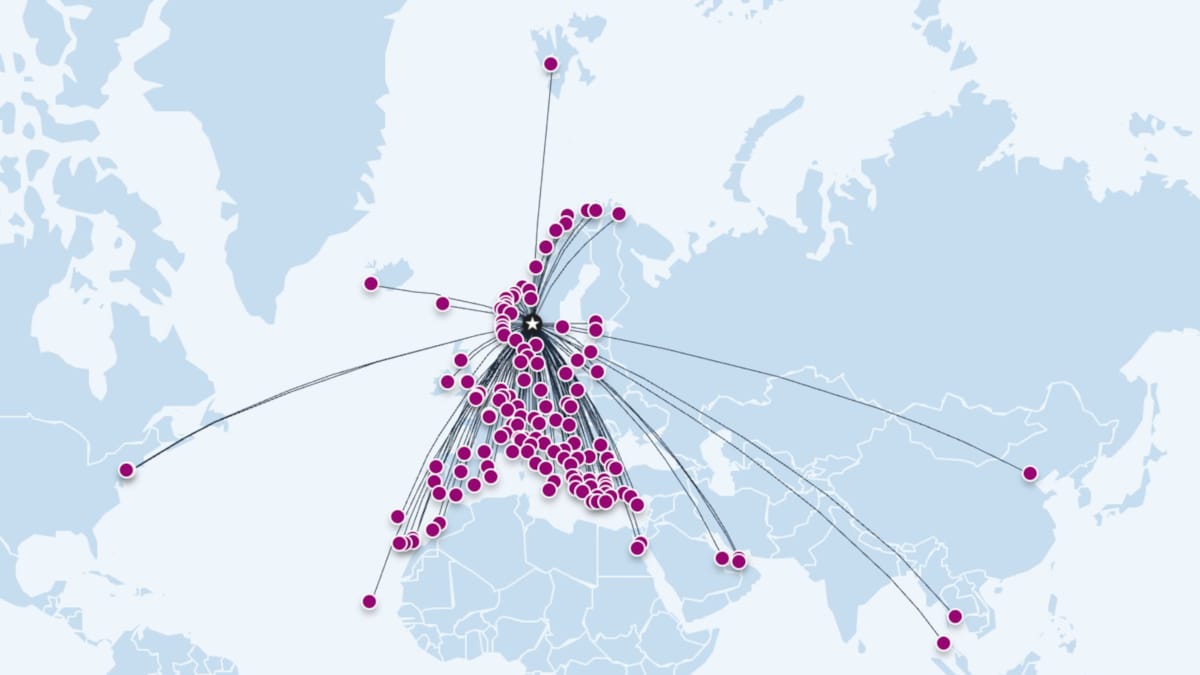
With a complex landscape of websites, services and audiences, Avinor wanted to modernise its digital presence. The challenge was to create one solution covering both the corporate website, Avinor.no, and the individual airport websites.
The platform also needed to accommodate future requirements relating to accessibility, data protection, integrations and scalability.
Many editors across Avinor are responsible for publishing content. The previous solution was seen as difficult to use, with limited structure and little overview of existing content. Manual processes also made everyday publishing time-consuming.
A central priority was therefore to give editors a more efficient and predictable way of working.

Goals and ambitions
The project aimed to:
-
Bring Avinor’s websites together within one shared platform
-
Improve collaboration between commercial operations, communications and internal teams
-
Create a clearer and more relevant experience for passengers and employees
-
Give editors modern tools for content production and publishing
-
Establish a robust and scalable technical foundation
Our approach
Representatives from different areas of Avinor were involved through workshops and advisory sessions. Together, we worked on the information structure and the main technology decisions.
Editorial freedom, efficient long-term management and a flexible platform were important principles throughout the project.
The previous solution had significant information architecture challenges. We identified opportunities to structure content more effectively, allowing editors to publish information once and adapt it where needed.
The project also introduced the Norwegian Design System from the Norwegian Digitalisation Agency. This provided a strong foundation for accessible and consistent digital services.
The design system also introduced certain constraints. Designers and developers worked closely together to create solutions that met the requirements while delivering the intended user experience.
Publishing in three written languages
Avinor decided early that all content should be available in both Norwegian written standards, Bokmål and Nynorsk, as well as English.
This placed significant demands on the translation and publishing workflow. Epinova’s AI Assistant for Optimizely was integrated to support editors with:
-
Drafting and translating content
-
Creating meta titles and descriptions
-
Writing alternative text for images
-
Improving content structure and accessibility
The assistant was particularly useful during the migration of existing content, although all content still required editorial review and quality assurance.
Creating meta descriptions is now much easier, and it helps make our content even more accessible.
Malin Jahren-Pedersen
Web editor at Avinor
The solution
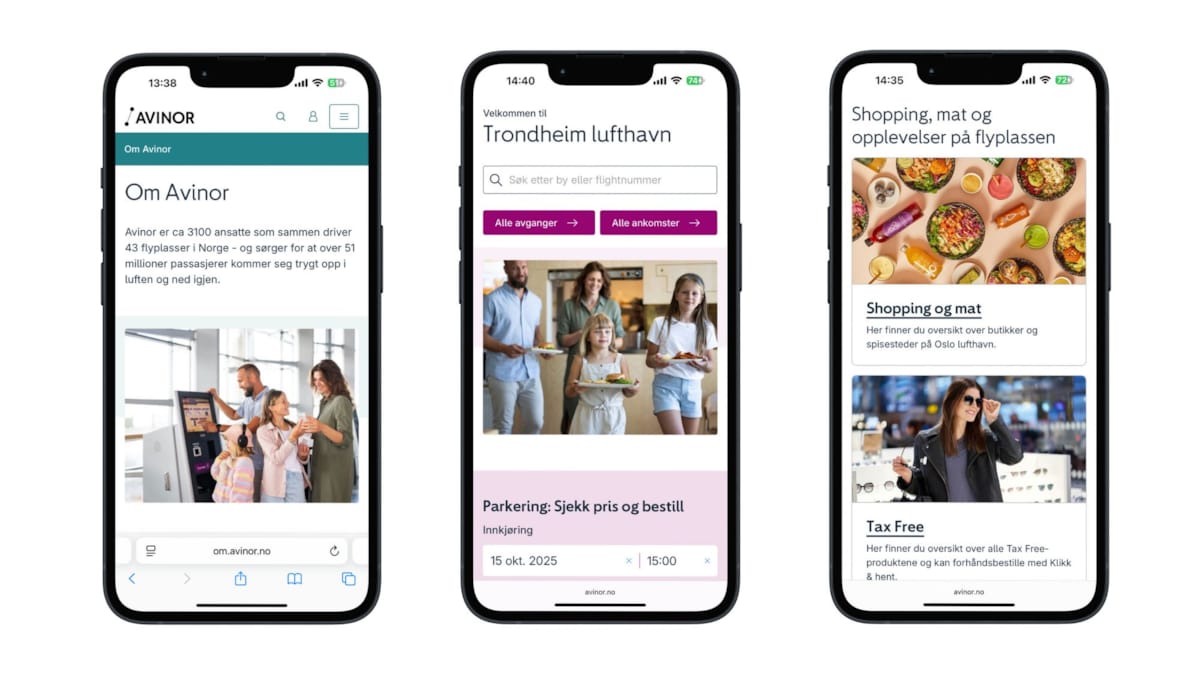
The solution is built as a complete Digital Experience Platform on Optimizely, using Epinova’s Proxima framework and optimised React components.
It provides a responsive and high-performing experience across languages, devices and user roles. Editors have a more intuitive publishing tool, while the platform is prepared for integrations with external systems and services.
The project was organised through multidisciplinary sprints. Epinova’s advisers, developers and designers worked closely with specialists from Avinor.
This created a shared understanding of the requirements and made it possible to take informed decisions throughout the project.
Technology and integrations
-
CMS: Optimizely DXP
-
Frontend: React-based interfaces
-
Backend: API-first architecture
-
Integrations: Connections to business-critical systems
-
Design: Based on the Norwegian Design System
-
Requirements: Accessibility and GDPR compliance
Results and impact
Avinor now has an integrated, robust and scalable platform that provides better control over content and communication.
Editors reported simpler workflows and more efficient publishing from the start. The user experience has improved for both internal and external audiences, and the platform provides a strong foundation for continued development.
We went from duct tape to a rocket engine. We now have a solution where all the components are in place, and we can accelerate with confidence.
Petter Norstrøm
Head of Internal Communications and Digital Channels at Avinor
Want to know how a modern DXP can give you better control?
Tell us about your current platform and what you want to improve. We will bring together the right people to review your needs and discuss the next steps.
Button: Book a review with our Optimizely experts